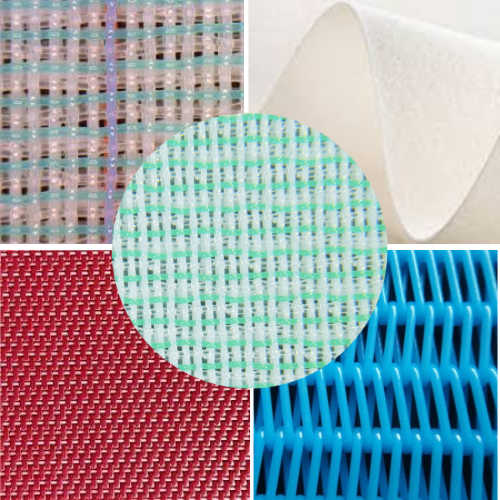
Independent, experience-proven technical consultancy for PMC yarn extrusion, monofilament engineering, and plant leadership across Forming, Press Felt, Dryer Woven & Spiral Fabrics. Master critical yarn properties including tensile modulus, elongation (EASL), hydrolysis resistance, abrasion resistance, and thermal shrinkage control to transform extrusion from reactive trial-and-error to repeatable, high-yield manufacturing stability.
Zero machinery, yarn, or resin bias
Forming, Press Felt, Dryer Woven & Spiral
Modulus, elongation, hydrolysis & wear
Prepared for yarn manufacturers, monofilament extruders, PMC weaving plants & supply chain leadership.
Calibrate orientation draw ratios, godet annealing, and EASL (Elongation at Specific Load) to prevent fabric stretching and diagonal skewing on paper machines.
Eliminate catastrophic steam degradation in dryer fabrics with carbodiimide stabilization, and enhance wet sand-slurry abrasion life over ceramic suction boxes.
Flawless performance across Forming fine mesh/SSB, Press Felt compaction-resistant base structures, Dryer Woven flat/round yarns, and Dryer Spiral link geometry.
Each section of a modern high-speed paper machine imposes radically distinct mechanical, thermal, and chemical stresses. PMC CENTRE provides dedicated monofilament extrusion and application consultancy across every PMC fabric position.
Single-layer, double-layer, and multi-layer SSB (Sheet Support Binder) weaves. Fine-gauge warp and alternating weft monofilaments (PET & PA6/PA66) engineered for:
Woven base fabric structures (single, double, triple-layer, and laminated). High-tenacity PA6, PA66, and PET monofilaments, twisted cords, and cabled yarns engineered for:
Single-tier and double-tier high-speed dryer positions. Aerodynamic flat yarns, profiled monofilaments, and round yarns (PET, PPS, PEEK) engineered for:
Seamless spiral fabrics for demanding packaging and board machines. Specialized spiral link monofilaments and cross-machine pintle wires engineered for:
We help extrusion and plant teams establish validated, repeatable parameter windows for the exact yarn physical properties that govern PMC fabric runnability:
Maximizing load-bearing stiffness and sonic modulus uniformity to guarantee zero fabric stretching under high-tension paper machine running conditions.
Calibrating Elongation at Specified Load (EASL), elongation at break, and elastic recovery to eradicate diagonal weave skewing and fabric narrowing.
Polymeric carbodiimide compounding, IV retention benchmarking, and autoclave test protocols protecting dryer monofilaments from hot steam degradation.
Wet sand-slurry abrasion testing, ceramic suction blade friction reduction, and polymer chain molecular weight optimization for extended life.
PMC CENTRE is the world’s first independent technical consultancy dedicated exclusively to Paper Machine Clothing (PMC). We do not manufacture, sell, or trade yarns, machinery, polymers, or fabrics. This complete independence allows us to diagnose and resolve monofilament extrusion and supply chain challenges purely on metallurgical and polymer engineering merit.
Intrinsic Viscosity (IV) benchmarking, PET/PA6/PA66/PPS/PEEK formulation, masterbatch dispersion, hydrolytic & thermal stabilizer optimization for demanding paper machine environments.
Melt pressure stability, screw geometry & shear control, multi-zone water quenching baths, orientation draw-ratio calibration, and inline laser diameter monitoring.
Multi-stage godet annealing, controlled shrinkage stabilization, stress-strain curve tuning, crimp memory balance, and anti-static oil lubrication application.
Weaving yarn runnability (warp/weft balance), loop seam splice integrity, aerodynamic flat-yarn profile stability, and raw material qualification audits across global suppliers.
We do not deliver academic classroom theory. Our training and retainer engagements are engineered to produce measurable improvements across your extrusion and plant floor.
Target and eliminate the real root causes of yarn diameter fluctuation, tensile variation, and thermal shrinkage deltas that cause fabric diagonal distortion, seam marking, or catastrophic fabric bowing on paper machines.
Systematically optimize extrusion startup regimes, eliminate package edge fall-off, tension flutter, and reduce costly polymer resin purging losses during color or polymer grade transitions.
Institutionalize bulletproof Standard Operating Procedures for extruder barrel profiles, quench bath temperatures, godet draw speeds, modulus verification, EASL checks, and offline hot-air & boiling water shrinkage testing.
Master the physics of yarn orientation and thermal relaxation. Achieve precise tensile symmetry, uniform elongation under tension, and stabilized residual shrinkage tailored for forming, press felt base, and dryer spiral link designs.
Accelerate New Product Development for flat yarns, bicomponent profiles, high-hydrolysis resistance dryer monofilaments, spiral link wires, and high-tenacity forming warps without months of costly trial-and-error.
Direct ongoing access to veteran monofilament and PMC specialists throughout the year to audit extrusion recipes, evaluate lot test reports, review customer complaints, and resolve acute production bottlenecks.
Yarn manufacturing and Paper Machine Clothing are an inseparable continuum across Forming, Press, Dryer Woven, and Spiral positions. In modern plants, when weavers encounter defects—such as weft bowing, seam mismatch, loop distortion, edge curl, uneven air permeability, or rapid on-machine wear—the immediate instinct is often to blame the loom setup or finishing stenter.
The Reality Observed Across Industrial Plants: Extensive plant audits reveal that over 75% of chronic weaving and seaming defects originate directly from subtle upstream yarn variations: modulus inconsistency, lot-to-lot Intrinsic Viscosity (IV) drift, non-uniform draw ratios, or thermal shrinkage differences across bobbin lots.
Attempting to optimize yarn extrusion in isolation (Module I) produces technically compliant bobbins that still fail under high-tension weaving or seam splicing. Module II bridges yarn extrusion directly with fabric application and troubleshooting—tuning yarn modulus, elongation, abrasion, and hydrolysis properties to exact loom beat-up dynamics and finishing conditions, guaranteeing true root-cause resolution and zero finger-pointing.
Polymer IV control, moisture <30ppm, anti-hydrolysis stabilizers & high-modulus orientation.
Elongation control (EASL), quench uniformity, godet annealing relaxation & laser diameter tolerance.
Warp/weft crimp balance, press base compaction resistance & dryer spiral loop thermo-fixation.
Stable drainage, uniform sheet formation, supreme hydrolysis & abrasion resistance, extended life.
Transparent, structured retainer investment designed for yarn manufacturing capability building and ongoing engineering optimization across all PMC fabric disciplines.
Retainer payable monthly in advance. Contract term: 1 Year.
Extrusion & monofilament process training dedicated exclusively to Yarn Extrusion & Property Optimization.
Technical Trainer Retainer • Extrusion
Extrusion engineering plus fabric weaving application guidance & troubleshooting across all PMC disciplines.
Technical Trainer Retainer • Yarn + Fabric
End-to-end integration: Yarn + Fabric + Paper Machine Application with direct customer complaint resolution.
Technical Trainer Retainer • Total Chain
Side-by-side evaluation across forming, press felt, dryer woven & spiral fabrics, critical properties, and supply chain.
| Capability / Deliverable | Module I Yarn Mfg ($1,000/M) |
Module II (Recommended) Yarn + Fabric ($1,500/M) |
Module III Total Supply Chain ($2,000/M) |
|---|---|---|---|
| 1. Yarn Extrusion & Physical Property Mastery | |||
| Extruder Screw Geometry, Melt Pressure & Temperature Profile Optimization | |||
| Initial & Tensile Modulus Optimization (Load-Bearing Rigidity & Sonic Modulus) | |||
| Elongation Dynamics & EASL (Elongation at Specific Load) Calibration | |||
| Anti-Hydrolysis Compounding (Carbodiimide Stabilizers, Autoclave Steam Testing & IV Retention) | |||
| Abrasion Resistance Testing (Sand-Slurry Testing, Friction Coefficients & Wear Life) | |||
| Thermal Shrinkage Delta Tuning (Boiling Water & Hot-Air Tests) | |||
| 2. Fabric Application & Multi-Discipline Troubleshooting | |||
| Forming Fabric Yarn Runnability (Single, Double & SSB Weaves, Warp/Weft Balance) | — | ||
| Press Felt Base Weave Yarn Compatibility (Compaction Recovery & Heavy Tensile Knots) | — | ||
| Dryer Woven Fabric Integration (Aerodynamic Flat Yarns, Round Profiles & Seam Loops) | — | ||
| Dryer Spiral Fabric Integration (Spiral Link Monofilaments & Pintle Wires) | — | ||
| Upstream-to-Downstream Root-Cause Defect Resolution (Zero Finger-Pointing) | Extrusion only | Yarn + Fabric Integrated | Full Chain Integration |
| 3. Paper Machine Application & Total Supply Chain | |||
| Monofilament Selection Tailored by Paper Grade (Graphic, Packaging, Board & Tissue) | — | — | |
| On-Machine Dewatering Diagnostics, Hydrolysis & Chemical Resistance Audits | — | — | |
| Direct Paper Mill Quality Complaint Investigation & Forensic Reports | — | — | |
| Global Raw Material Sourcing, Polymer Supplier Audits & Benchmarking | — | — | |
| 4. Commercials & Terms | |||
| Monthly Advance Retainer | $1,000 / M | $1,500 / M | $2,000 / M |
| Yearly Contract (Paid Quarterly - 10% Savings) | $900 / M ($2,700/Qtr) |
$1,350 / M ($4,050/Qtr) |
$1,800 / M ($5,400/Qtr) |
| On-Site Visit Charges | $250 / head / day | $250 / head / day | $250 / head / day |
| Travel & Accommodation | Directly arranged and covered by client (round-trip airfare, visa fees & invitation support, local plant transit, and full-board standard hotel stay) | ||
Clear, transparent commercial parameters governing PMC CENTRE technical trainer retainer agreements.
Technical Trainer Retainer is payable in advance as per agreed payment terms (Monthly or Yearly paid quarterly with 10% savings).
$250 / head / day applicable for plant execution, traveling days, and intermediate off days during on-site assignments.
Directly arranged and covered by client, including round-trip airfare, visa fees & invitation support, local plant transit, and full-board standard hotel stay.
Standard contract term is 1 Year to ensure sustainable capability transfer, with a mutual 2-month notice period for either party.
Strict project separation and mutual Non-Disclosure Agreements (NDA) are standard to protect proprietary polymer recipes, extrusion profiles, and operational parameters.
All official scope confirmations and communications are coordinated via peter.striegl@pmccentre.com.
Our team comprises seasoned Paper Machine Clothing yarn specialists, manufacturing engineers, and paper technologists with direct shop-floor leadership.
PMC Yarn & Monofilament Specialist
Decades of international experience in Paper Machine Clothing polymer and monofilament technology across Forming, Press Felt base weaves, Dryer Woven (flat & round yarns), and Dryer Spiral fabrics. Deep authority in optimizing key yarn properties including initial & tensile modulus, elongation control (EASL), anti-hydrolysis stabilization for hot steam sections, abrasion resistance, and thermal shrinkage behavior across global PMC supply chains.
PMC Manufacturing Specialist • Textile Engineer
Extensive hands-on leadership in forming and dryer fabric manufacturing across global plants. Deeply specialized in linking monofilament properties with fabric weaving stability, heat-setting stabilization, seaming automation, and eliminating costly trial-and-error.
Forming Application Specialist • Paper Technologist
Leads PMC application engineering for paper mills. Practical expertise in running fabrics on high-speed paper machines, drainage diagnostics, fabric life extension, wear analysis, and bridging raw material parameters with paper mill runnability.
Select your preferred training module and mention any special requirements. PMC CENTRE will review your operational requirements and program an onboarding schedule.
Confirm your module and submit your plant requirements.